A rounding bottom (also called a saucer or U-shape) is a slow, gradual reversal from a downtrend to an uptrend. Its upside-down version, the rounding top (an inverted U or arc), marks a slow turn from an uptrend to a downtrend. These patterns usually develop over weeks or months and appear on stock, crypto and forex charts.
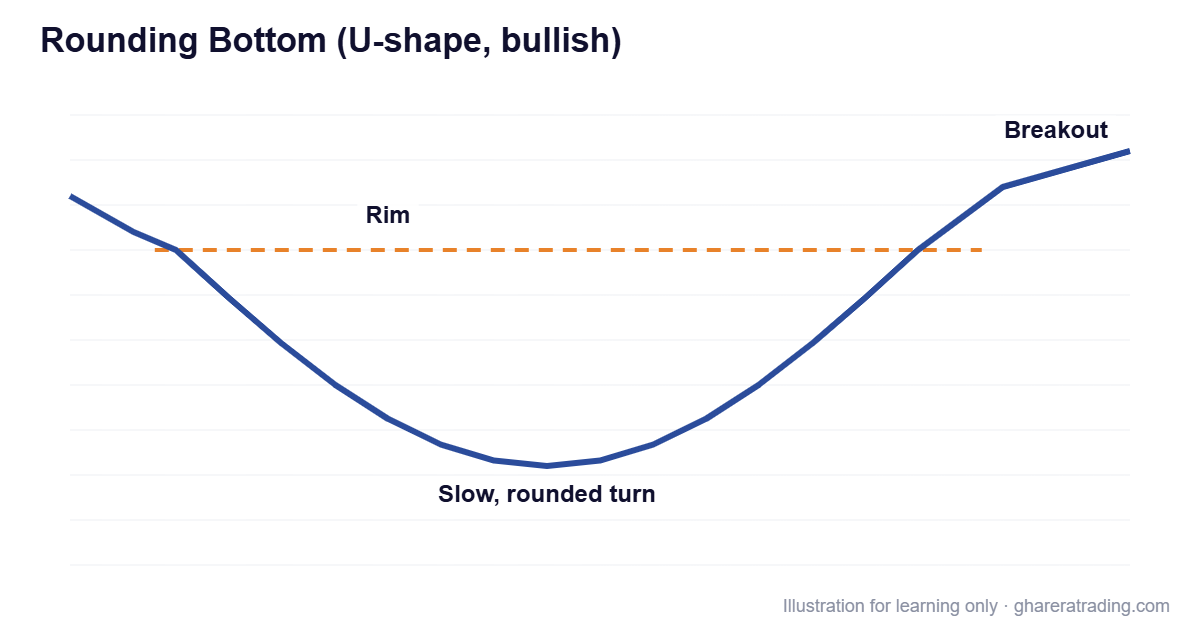
Rounding bottom (bullish)
Price falls, but the fall slows down; price moves sideways for a while near the low; then it gradually begins to rise. The smooth, curved shape shows selling pressure fading slowly and buyers gradually taking control, rather than a sudden turn.
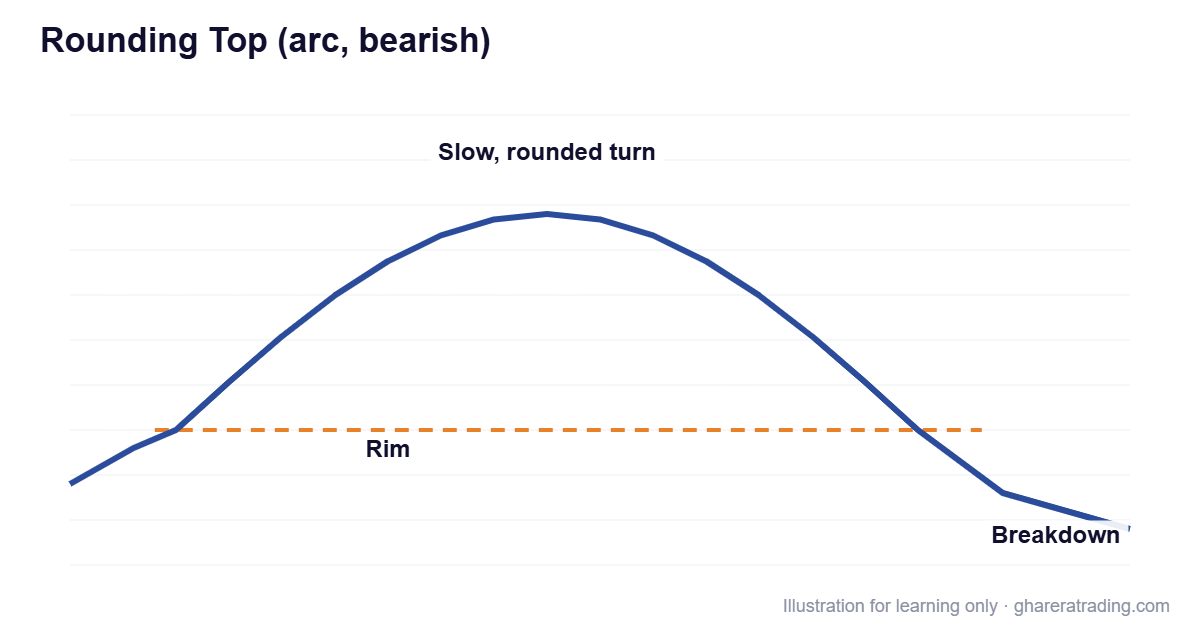
Rounding top (bearish)
The mirror image: an uptrend loses momentum, flattens out, and gradually turns down. The curved top, sometimes called an arc, shows buying interest slowly drying up.
What beginners should notice
- These patterns are slow; they are easier to see on daily and weekly charts.
- Volume often falls near the middle of the curve and rises as the new trend begins.
- Traders often watch for a break of the level where the curve started (the “rim”) as confirmation.
- Because they form slowly, patience matters more than speed.
Rounding bottom vs V-shape
A rounding bottom turns slowly and smoothly. A V-shape reversal turns suddenly and sharply. The cup and handle also includes a rounded bottom, followed by a small handle.
See all patterns in our chart patterns guide.
Want to go beyond the basics?
This guide covers the basics of rounding patterns. Our technical analysis and trading course in Urdu takes you much further, with what this article leaves out:
- Complete trading strategies, with clear rules for entries, exits and stop losses
- Real chart examples, worked through step by step
- How to combine indicators, chart patterns and risk management into one plan
- Techniques you can apply to the Pakistan Stock Exchange, crypto, forex and other live markets
24 recorded lessons · about 11.5 hours · 12 months of access
This article is for education only and is not investment advice. Trading shares, cryptocurrencies, forex and other markets involves risk, including the loss of capital.